Why “Thick” Buckets Crack: The Metallurgy Your Sourcing Team Is Missing
30 Jan, 2026Company
Manufacturing Site:CPM | 20 Years OEM Service
A common procurement mistake in the mining sector is equating "Steel Thickness" with "Durability." In our 20-year history of fabricating for global brands, we’ve conducted hundreds of "post-mortems" on failed units.
The verdict? Buckets don’t snap because the rock is too hard; they snap because the bucket welding process ignored the laws of physics.
● THE HIDDEN WEAKNESS: THE "HAZ" TRAP
Look beyond the paint. The real battle for bucket life is fought in the HAZ (Heat Affected Zone)—the area of the steel plate directly adjacent to the weld.
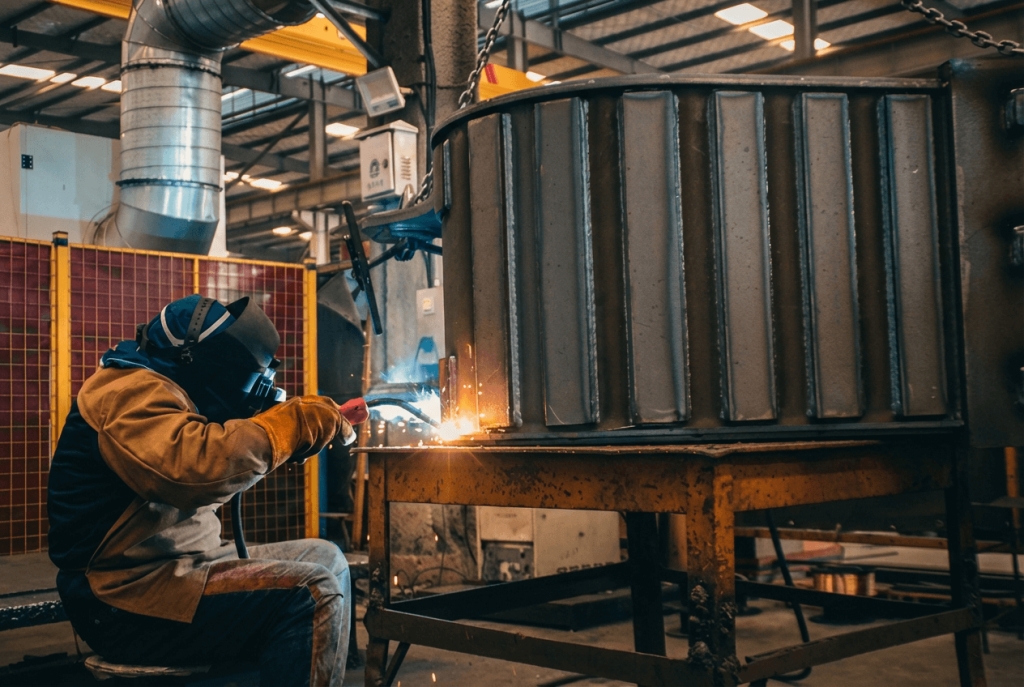
Shop Floor Reality: If your supplier pours too much heat into a heavy duty attachment manufacturing line without control, they "soften" the steel. We’ve seen premium Hardox plates lose 50% of their hardness right at the seam because the welder didn't respect Interpass Temperature.
Sourcing Risk: You may be specifying 450 HBW plate, but the effective structural performance at the welded joint can drop significantly if heat input is not properly controlled.
● OUR 150°C NON-NEGOTABLE: NO HEAT, NO ARC.
In our factory, "Efficiency" never overrides "Integrity." For any excavator bucket with a lip plate or hinge thicker than 40mm, cold welding is a fireable offense.
The Physics: Thick plates act as a "heat sink," sucking warmth away so fast that hydrogen gas gets trapped. This is the origin of Cold Cracking.
The CPM Protocol: We use induction heating to saturate the steel to 150°C - 200°C before the first arc is struck.
Procurement Impact: In our internal service records, this step has reduced the frequency of major weld-related repairs by approximately 60–70% in comparable mining applications. If your supplier doesn't own induction heaters, they aren't a mining-grade manufacturer.
● RELEASING THE "INTERNAL PRESSURE" (STRESS RELIEF)
A freshly welded bucket is a "stressed" asset. The thermal expansion and contraction during the bucket welding process leave the molecules in a state of high tension.
The "Invisible" Quality Check: Most factories paint and ship immediately. We don't. We use Vibratory Stress Relief (VSR) or controlled tempering. By finding the resonant frequency of the excavator bucket shell, we "relax" the internal molecular tension.
Why it matters: A relaxed weld can absorb the violent vibration of a 50-ton machine; a stressed weld will shatter like glass under the same load.
● FIELD AUDIT: THE "UNDERCUT" TEST
Procurement managers: during your next site visit, look at the Weld Toe (the edge where the weld meets the plate).
The Red Flag: If you see a tiny groove or "ditch" carved into the plate, it’s an Undercut. The Science: In the high-vibration world of mining, an undercut acts like a "perforated line" on a notebook. It’s the exact point where the structure will eventually fail. Our 20-year veteran welders are trained to achieve a seamless, smooth transition—if it's not smooth, it's not sent to the customer.
Sourcing FAQ: Real-World Scenarios
Q: "We just did an emergency excavator bucket repair in the field, and it cracked again in 48 hours. Why?"
A: You likely "Cold Welded" it. Without 150°C pre-heating, the field repair created a new, ultra-brittle HAZ. Field repairs must mimic factory conditions to be permanent.
Q: "Is 'pretty' welding always 'strong' welding?" A: Not necessarily.
A "pretty" bead can hide a lack of Full Penetration. As an OEM partner, we provide UT (Ultrasonic Testing) reports to prove the weld goes all the way through, not just sitting on top.
[Next Step for Your Fleet]
Reliability in heavy-duty attachment manufacturing is a documented science, not a workshop guess. Don't let your mining operations become the testing ground for a supplier's shortcuts.
Want to see our 150°C pre-heating and stress-relief protocols in action? We believe in full engineering transparency. We invite you to explore the "Manufacturing Excellence" section of our website. There, you can watch our full-length Bucket Fabrication Process Video, which documents every stage—from the first robotic plasma cut to the specialized welding of high-thickness lip plates and our final stress-relief cycles.
See the OEM difference for yourself. [Watch the Full Process Video]